
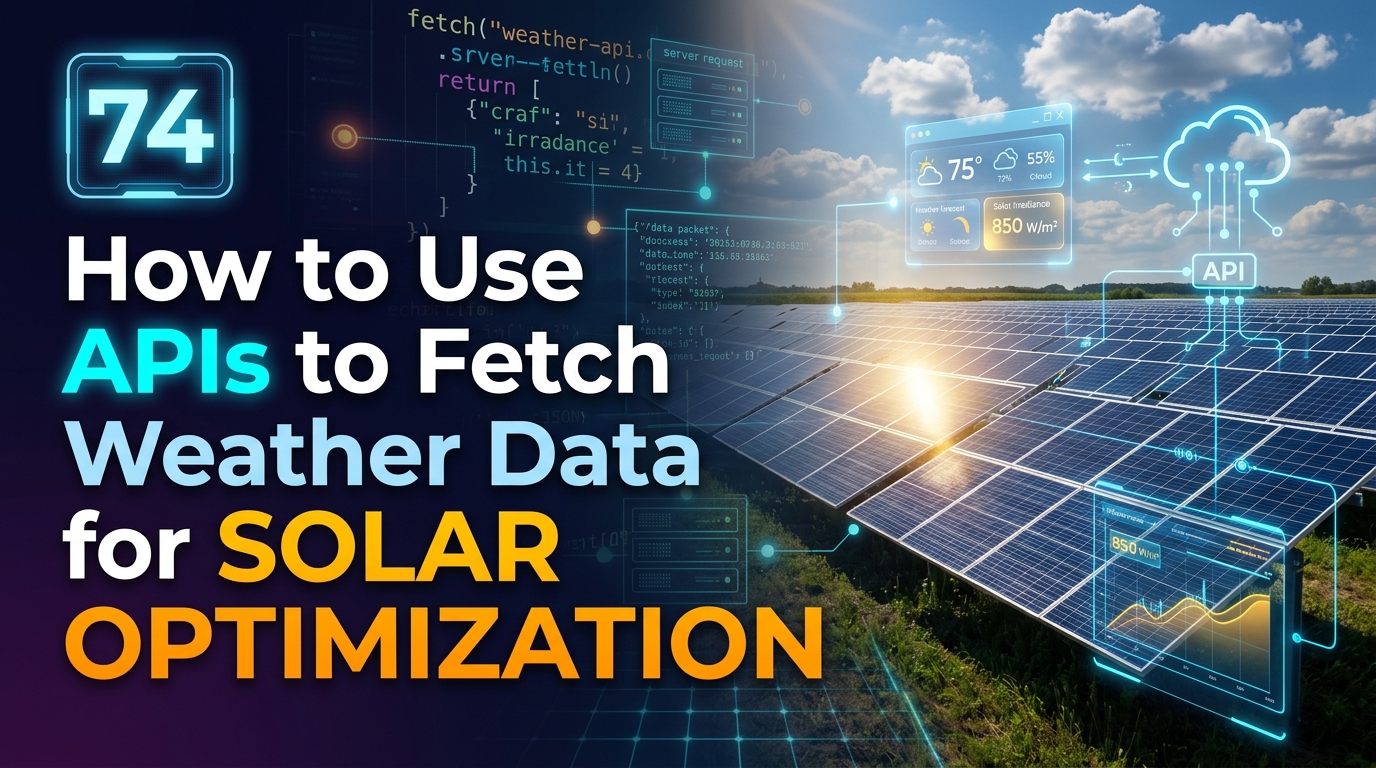
Learn how to harness the power of APIs to access real-time weather data and optimize the performance of your solar energy system. By leveraging these tools, you can make informed decisions that maximize efficiency and savings. Dive into this guide to discover how APIs can revolutionize the way you manage your solar resources.
What are APIs?
Application Programming Interfaces (APIs) are sets of rules and protocols that allow different software applications to communicate with each other. They define the methods and data formats that applications can use to request and exchange information. APIs act as intermediaries, facilitating the interaction between different software systems, enabling them to work together seamlessly.
APIs are commonly used to access the functionality of web services, such as retrieving data from a remote server or integrating with third-party services. They provide developers with a standardized way to interact with external systems, abstracting the complexity of the underlying implementation and promoting interoperability across different platforms and programming languages.
Benefits of using APIs for weather data
Access to Real-Time Data: APIs provide access to real-time weather data, allowing users to stay updated with the latest weather conditions. This is crucial for various industries such as agriculture, transportation, and outdoor events planning.
Integration with Applications: By integrating weather APIs into applications, developers can enhance user experience by providing location-specific weather forecasts and alerts. This can lead to increased user engagement and satisfaction.
Cost-Effective Solution: Using weather APIs eliminates the need for maintaining and updating a separate weather database. This reduces costs associated with data storage and maintenance, making it a cost-effective solution for businesses of all sizes.

Choosing the right API for weather data
When selecting an API for weather data, it is essential to consider several key factors to ensure that it meets the specific requirements of your project. One crucial aspect to evaluate is the data accuracy and reliability provided by the API. Look for APIs that source their data from reputable meteorological sources and offer real-time updates to ensure the information is up-to-date and trustworthy.
Another important consideration is the API’s documentation and ease of integration. Opt for APIs that provide clear and comprehensive documentation, including detailed explanations of endpoints, parameters, and response formats. APIs with well-organized documentation can streamline the integration process and make it easier for developers to work with the data effectively.
Fetching weather data for solar optimization
Fetching weather data for solar optimization involves retrieving real-time and historical weather information to optimize the performance of solar energy systems. By accessing accurate weather data, solar panel installations can adjust their operations based on current conditions, such as sunlight intensity, temperature, and precipitation. This data is crucial for maximizing the efficiency and output of solar panels, ultimately leading to increased energy production and cost savings.
One method of fetching weather data for solar optimization is through API integration with reliable weather services. APIs allow for seamless communication between the solar system and weather data providers, enabling real-time updates and forecasts to be incorporated into the system’s operations. By continuously fetching and analyzing weather data, solar installations can dynamically adapt to changing environmental conditions, ensuring optimal performance and energy generation.
Analyzing weather data for solar optimization
Understanding Weather Data: Analyzing weather data is crucial for optimizing solar energy systems. By studying historical weather patterns and forecasts, solar system operators can anticipate fluctuations in solar energy production. Factors such as temperature, sunlight duration, cloud cover, and precipitation levels all impact the efficiency of solar panels.
Data Interpretation Techniques: Various data analysis techniques can be employed to interpret weather data effectively. Time series analysis can reveal patterns and trends in weather conditions over time, helping to predict future solar energy generation. Statistical methods, such as regression analysis, can also be used to identify correlations between weather variables and solar panel performance, guiding system optimization strategies.
Summary: In conclusion, leveraging APIs for weather data in solar optimization projects can significantly enhance the efficiency and effectiveness of energy production. By accessing real-time and historical weather information through APIs, solar energy systems can be fine-tuned to maximize output and minimize downtime.
Future Implications: As the renewable energy sector continues to grow, the role of APIs in weather data integration will become even more crucial. Innovations in data analytics and machine learning algorithms can further optimize solar energy systems based on weather patterns, making them more reliable and cost-effective in the long run.